Why Is My Pool Cloudy in Thousand Oaks? A Local Diagnostic Guide That Actually Fixes It #

You step outside in Dos Vientos, Wildwood, or Lynn Ranch, and the water looks off.

Dull. Hazy. Almost gray.

So you ask the question every pool owner eventually asks.

Why is my pool cloudy?

In Thousand Oaks, this is one of the most common service issues we see. And when homeowners call asking why their pool is cloudy, the answer is rarely random.

It is chemistry, filtration, or environmental load. Let’s break it down correctly.

Cloudy Pool Water in Thousand Oaks With Normal Chlorine Levels #

You test the water. Chlorine is fine.

So why is my pool cloudy if sanitizer levels are good?

Because chlorine does not control calcium balance, pH drift, or total alkalinity.

Thousand Oaks water is hard.

That is not algae. That is an imbalance.

If you are in the area and dealing with recurring haze, this is exactly what professional pool service in Thousand Oaks is designed to correct

In areas like Conejo Oaks and Lang Ranch, high calcium hardness is common.

When pH climbs above 7:

  • Calcium precipitates
  • Microscopic particles are suspended in water
  • The pool turns cloudy white

That is not algae. That is an imbalance.

If you are in the area and dealing with recurring haze, this is exactly what professional pool service in Thousand Oaks is designed to correct

Cloudy Pool After Winter #

If you opened your pool this spring and asked, why is my pool cloudy, it is likely winter buildup.
All winter:

  • Rain hits
  • Debris settles
  • Water barely moves
  • Fine sediment collects

When you restart circulation, that settled debris lifts into suspension.

Now the pool looks hazy.

This is not always a chemical issue. It has poor circulation and compacted debris.

Fix order:

  • Vacuum first
  • Clean or backwash filter
  • Then rebalance chemistry

Dumping shock on winter sludge will not clear it.

That is how cloudy spring pools actually get fixed.

Cloudy Water After Shocking or Heavy Chlorine Treatment #

You shocked the pool, and now it looks worse.

Again, you’re asking, why is my pool cloudy after I added chemicals?

Shock oxidizes contaminants. Dead algae, bacteria, and organic debris break apart.

Your filter must remove those particles.

If your DE grids are dirty or your cartridge is clogged, debris stays suspended. The water stays cloudy.

Whether you’re in Westlake Village or Newbury Park, we have these situations handled.

If the filter system is not cleaned and rebalanced properly, clarity will not return.

Milky White Pool Water But Not Green #

There is a difference between cloudy and green.

Green means active algae.

Milky white usually means:

  • Dead algae
  • Calcium fallout
  • High total dissolved solids
  • Dirty filtration media

If you are staring at dull gray water in the Thousand Oaks heat and asking why is my pool cloudy but not green, you are likely in early-algae-bloom or calcium-imbalance territory.

Wait too long and it turns green fast.

Pool Water Cloudy After Wind in Thousand Oaks #

Santa Ana winds dump fine dust across Dos Vientos, Wildwood, and parts of Camarillo.

After heavy wind events, calls spike.

Homeowners can ask, why is my pool cloudy even though it was clear yesterday?

Because micro-particulates overwhelm the filter system.

Fine dust stays suspended unless:

  • Pump run time is increased
  • The filter is cleaned
  • Proper clarifier or floc is applied
  • Water chemistry is rebalanced

And if you are in Camarillo and seeing this repeatedly, local support is here:

Environmental overload is predictable in this region. It requires proactive maintenance.

Why Cloudy Pool Water Gets Worse Every Day #

If the water progressively worsens, algae begin to multiply.

Water typically shifts:

  • Clear
  • Slight haze
  • Cloudy
  • Green

At that stage, guessing with chlorine is not a strategy.

Proper testing must include:

  • Free chlorine
  • Combined chlorine
  • pH
  • Total alkalinity
  • Calcium hardness
  • Cyanuric acid

Blind chemical dumping is how pools get expensive fast.

The Real Answer to Why Is My Pool Cloudy #

Here it is. When someone in Thousand Oaks asks why my pool is cloudy, it always comes down to one of four root causes:
  • Chemical imbalance
  • Filtration failure
  • Environmental debris overload
  • Early algae development
It is never random. It is measurable. Fixable. Preventable . If you are in our service area and your water clarity keeps dropping, stop guessing. Call 805.586.2055 to get your free estimate. Clear water is not luck. It is controlled chemistry and maintained equipment.

What Should My Pool pH Be? A Straight‑Talk Guide to Better Water

If you’ve ever stared at a test strip wondering, “What should my pool pH be?” here’s the quick answer: aim for 7.4 — 7.6, and stay between 7.2 and 7.8.

That range keeps the water comfortable, your sanitizer effective, and your surfaces and equipment from getting slowly chewed up.

Why Water Balance Matters More Than “Does It Look Blue?”

Most people only think about their pool chemistry when the water suddenly looks wrong.

The truth: your water balance has been drifting for days or weeks before that. When the water is too acidic (pH too low), you’ll notice:

  • Itchy skin and burning eyes
    Etching on plaster, grout, or pebble finishes
  • Corrosion on metal fixtures and inside heaters or pumps

When it’s too basic (pH too high), expect:

  • Dull, hazy, or cloudy water
    Scale on tile, walls, and equipment
  • Chlorine that “tests fine” but doesn’t actually keep the pool clean

A lot of the classic “why is my pool green?” problems start here, with a balance that slipped and never got corrected.

That’s exactly the kind of scenario you unpack in our green water guide, which shows how rain, debris, and bad balance team up to turn a pool into a swamp.

The Sweet Spot: Where Your Pool pH Should Live

Here’s the target range most pros use:

Ideal: 7.4–7.6

Acceptable: 7.2–7.8

Over 7.8: The sanitizer weakens, and scale starts forming

Under 7.2: Water becomes aggressive and starts attacking surfaces and metal

That 7.4–7.6 window works because:It’s close to the pH of human eyes and skin, so swimmers are more comfortable.

Chlorine stays efficient, so you don’t have to overdose the pool

Equipment and surfaces last longer because the water isn’t constantly fighting them.

Any time your pool drifts way out of that range and stays there, you’re basically setting the stage for green or cloudy water, just on a delay.

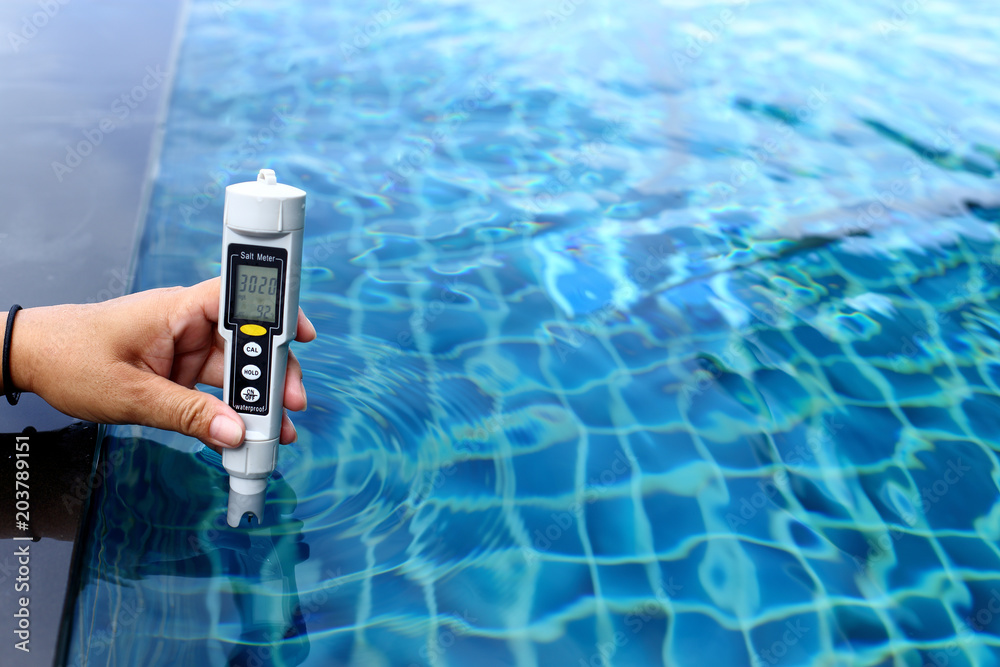
Pool Testing: How To Do Without Guessing

If you only test “when it looks off,” you’re reacting. If you test on a schedule, you’re actually managing.

A simple testing routine:

  • Use a reliable test kit or quality test strips
  • Test 2–3 times per week in hot weather or heavy swim season
  • Take samples from elbow depth, away from return jets
  • Test before adding chemicals, not right after

When your water looks more milky or hazy than truly green, that’s usually the cloudy‑water version of the same chemistry story.

Most cloudy pool issues come down to water balance drifting out of range or poor circulation.

Adjusting Low or High pH: Step‑By‑Step

Once you know where your levels are, bring them back into that 7.4–7.6 zone in controlled moves, not in one giant swing.

When your pH is too low (water is too acidic):

  • Add a pH increaser
  • Dose in small amounts, let the pump run, then retest
  • Repeat in steps instead of trying to fix it in one shot

When your pH is too high (water is too basic):

  • Add a pH reducer (muriatic acid or dry acid)
  • Follow the label closely and handle acids carefully
  • Let the pool circulate, then retest so you don’t overshoot

The big mistake is chasing the number every few minutes.

Adjust, circulate, test later.

Slow and methodical beats “dump and pray” every time.

How Alkalinity and pH Work Together


If your readings never seem stable, it’s not just pH, it’s total alkalinity messing with you.

Low alkalinity = pH swings all over the place

High alkalinity = pH constantly trying to creep back up

That’s where so many real‑world problems show up:

Pool slowly goes green because sanitizer never really had a fair shot
Pool stays cloudy even after you shock, because the chemistry underneath is still out of balance

Those are the exact kinds of situations your green‑water and cloudy‑water resources are built around: balance, sanitizer, and circulation all working together (or not).

Real‑World Situations: Green and Cloudy Water

If you’ve ever walked out to the backyard and thought, “It was fine last week, what happened?” it’s usually one of these:

  • Heavy rain: Dilutes chlorine, shifts water balance, and washes in dirt and organics
  • Big pool party: Sunscreen, body oils, and heavy-use burn-through sanitizer
  • DIY shock at the wrong time: You shock when the chemistry is already out of range, so the water never really clears

That’s why troubleshooting guides on green and cloudy water matter; they explain what the water is actually doing beneath the surface.

When It Makes Sense to Hand It Off

If you’d rather swim than babysit your water chemistry, the move isn’t to ignore it; it’s to put it on autopilot. A good monthly maintenance and pool cleaning routine usually includes:

  • Regular testing and balancing
  • Skimming, brushing, and vacuuming
  • Filter checks and cleanings
  • Catching problems early, before they show up as green or cloudy water

If you’re not sure how often that level of service makes sense for your pool, most of the “how does this work?” and “what do you actually do each visit?” questions are already covered in our FAQ section, which spells out expectations and common concerns in plain language.

Quick Takeaway: Where Your Pool pH Should Be

If you only remember one thing from this: Aim for 7.4–7.6

Stay within 7.2–7.8

Fix water balance before you panic about color or clarity

Get that right, and everything else – clarity, comfort, and equipment life – gets much easier to manage.

When the energy is high and the stakes matter, you don’t want to leave it to chance; you want professionals who know how to guide it, balance it, and deliver results without the chaos.

Call us at (805) 586-2055 and let’s make it happen.

Was this helpful?

  • Happy
  • Normal
  • Sad
Updated on February 13, 2026