Pool Winterization Guide (Even for Mild Winters)
What Should My Pool pH Be? A Straight‑Talk Guide to Better Water
If you’ve ever stared at a test strip wondering, “What should my pool pH be?” here’s the quick answer: aim for 7.4 — 7.6, and stay between 7.2 and 7.8.
That range keeps the water comfortable, your sanitizer effective, and your surfaces and equipment from getting slowly chewed up.
Why Water Balance Matters More Than “Does It Look Blue?”
Most people only think about their pool chemistry when the water suddenly looks wrong.
The truth: your water balance has been drifting for days or weeks before that. When the water is too acidic (pH too low), you’ll notice:
- Itchy skin and burning eyes
Etching on plaster, grout, or pebble finishes - Corrosion on metal fixtures and inside heaters or pumps
When it’s too basic (pH too high), expect:
- Dull, hazy, or cloudy water
Scale on tile, walls, and equipment - Chlorine that “tests fine” but doesn’t actually keep the pool clean
A lot of the classic “why is my pool green?” problems start here, with a balance that slipped and never got corrected.
That’s exactly the kind of scenario you unpack in our green water guide, which shows how rain, debris, and bad balance team up to turn a pool into a swamp.
The Sweet Spot: Where Your Pool pH Should Live
Here’s the target range most pros use:
Ideal: 7.4–7.6
Acceptable: 7.2–7.8
Over 7.8: The sanitizer weakens, and scale starts forming
Under 7.2: Water becomes aggressive and starts attacking surfaces and metal
That 7.4–7.6 window works because:It’s close to the pH of human eyes and skin, so swimmers are more comfortable.
Chlorine stays efficient, so you don’t have to overdose the pool
Equipment and surfaces last longer because the water isn’t constantly fighting them.
Any time your pool drifts way out of that range and stays there, you’re basically setting the stage for green or cloudy water, just on a delay.
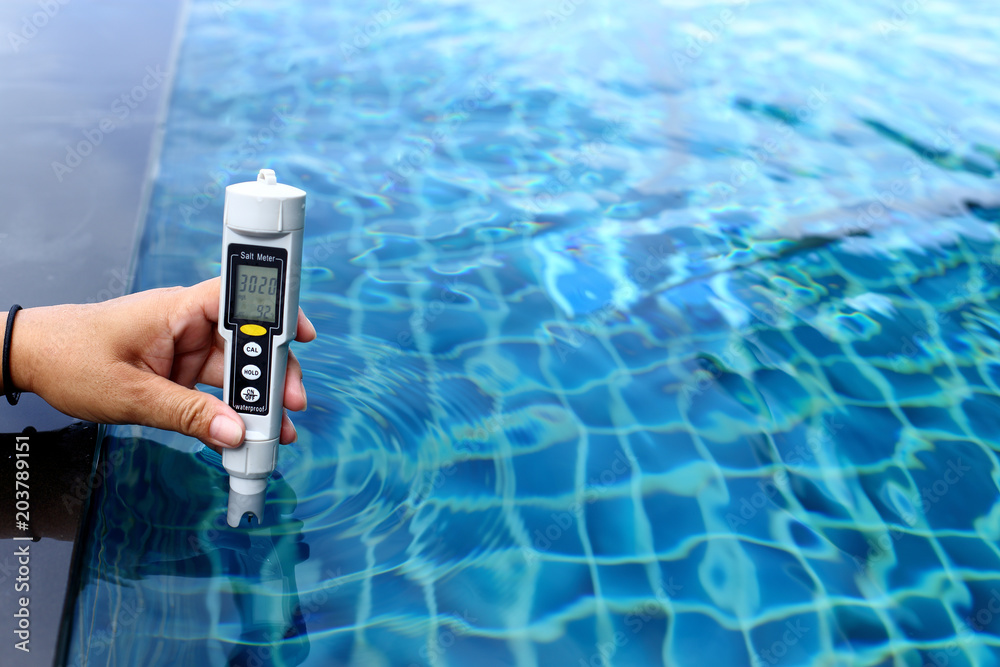
Pool Testing: How To Do Without Guessing
If you only test “when it looks off,” you’re reacting. If you test on a schedule, you’re actually managing.
A simple testing routine:
- Use a reliable test kit or quality test strips
- Test 2–3 times per week in hot weather or heavy swim season
- Take samples from elbow depth, away from return jets
- Test before adding chemicals, not right after
When your water looks more milky or hazy than truly green, that’s usually the cloudy‑water version of the same chemistry story.
Most cloudy pool issues come down to water balance drifting out of range or poor circulation.
Adjusting Low or High pH: Step‑By‑Step
Once you know where your levels are, bring them back into that 7.4–7.6 zone in controlled moves, not in one giant swing.
When your pH is too low (water is too acidic):
- Add a pH increaser
- Dose in small amounts, let the pump run, then retest
- Repeat in steps instead of trying to fix it in one shot
When your pH is too high (water is too basic):
- Add a pH reducer (muriatic acid or dry acid)
- Follow the label closely and handle acids carefully
- Let the pool circulate, then retest so you don’t overshoot
The big mistake is chasing the number every few minutes.
Adjust, circulate, test later.
Slow and methodical beats “dump and pray” every time.
How Alkalinity and pH Work Together
If your readings never seem stable, it’s not just pH, it’s total alkalinity messing with you.
Low alkalinity = pH swings all over the place
High alkalinity = pH constantly trying to creep back up
That’s where so many real‑world problems show up:
Pool slowly goes green because sanitizer never really had a fair shot
Pool stays cloudy even after you shock, because the chemistry underneath is still out of balance
Those are the exact kinds of situations your green‑water and cloudy‑water resources are built around: balance, sanitizer, and circulation all working together (or not).
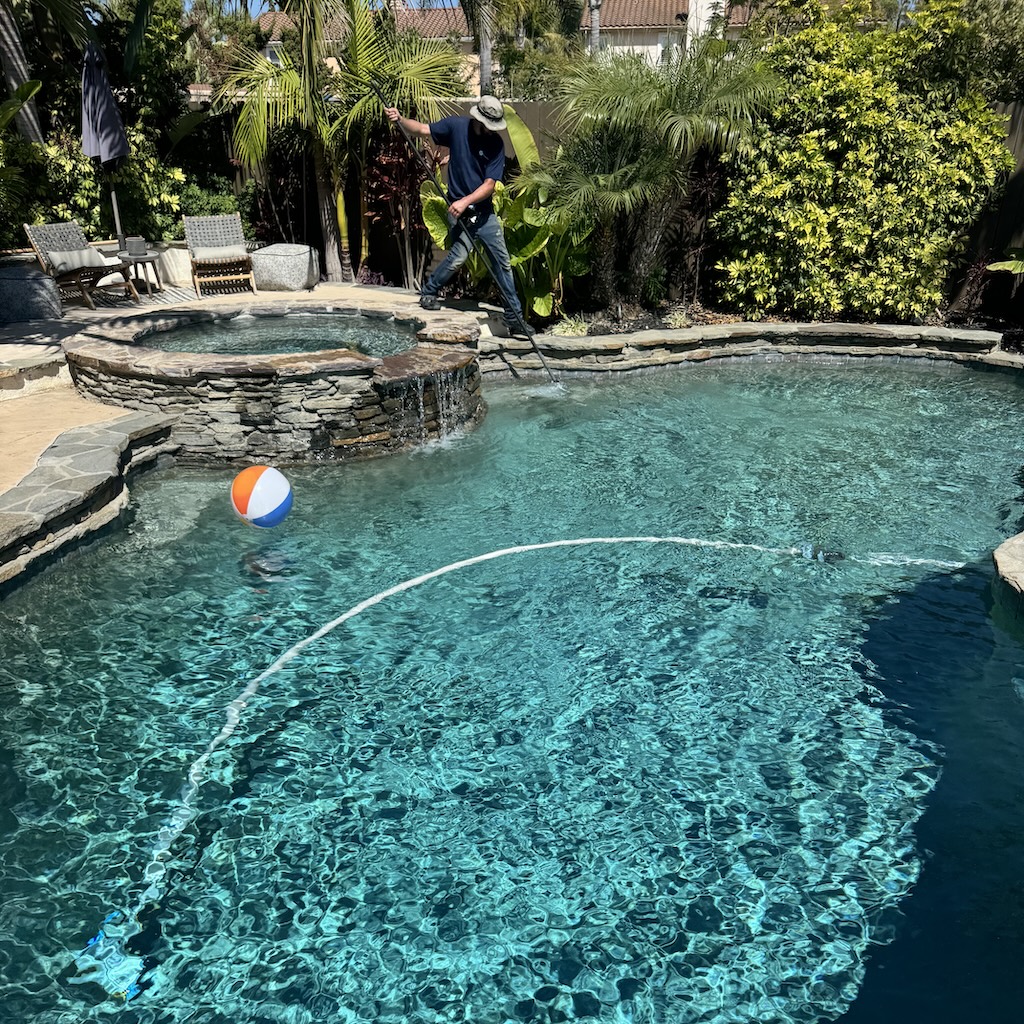
Real‑World Situations: Green and Cloudy Water
If you’ve ever walked out to the backyard and thought, “It was fine last week, what happened?” it’s usually one of these:
- Heavy rain: Dilutes chlorine, shifts water balance, and washes in dirt and organics
- Big pool party: Sunscreen, body oils, and heavy-use burn-through sanitizer
- DIY shock at the wrong time: You shock when the chemistry is already out of range, so the water never really clears
That’s why troubleshooting guides on green and cloudy water matter; they explain what the water is actually doing beneath the surface.
When It Makes Sense to Hand It Off
If you’d rather swim than babysit your water chemistry, the move isn’t to ignore it; it’s to put it on autopilot. A good monthly maintenance and pool cleaning routine usually includes:
- Regular testing and balancing
- Skimming, brushing, and vacuuming
- Filter checks and cleanings
- Catching problems early, before they show up as green or cloudy water
If you’re not sure how often that level of service makes sense for your pool, most of the “how does this work?” and “what do you actually do each visit?” questions are already covered in our FAQ section, which spells out expectations and common concerns in plain language.
Quick Takeaway: Where Your Pool pH Should Be
If you only remember one thing from this: Aim for 7.4–7.6
Stay within 7.2–7.8
Fix water balance before you panic about color or clarity
Get that right, and everything else – clarity, comfort, and equipment life – gets much easier to manage.
When the energy is high and the stakes matter, you don’t want to leave it to chance; you want professionals who know how to guide it, balance it, and deliver results without the chaos.
Call us at (805) 586-2055 and let’s make it happen.
Share This Article :


Updated on February 12, 2026