Does a Pool Vacuum or Robotic Cleaner Replace a Pool Service?
A good robot is a real upgrade for the floor and walls. Here’s what a pool vacuum handles well, what it never touches, and where the two overlap.
Listed Price, Mid-Range Dolphin Robot
Default Robot Cleaning Cycle
Max Chlorine in a Dolphin Manual
CDC Minimum Chlorine for Pools
Here’s how it usually goes. The robot shows up in a box the size of a small dog, and for two weeks it’s the best thing that ever happened to the pool. It climbs the walls, eats the sand off the floor, and parks itself by the steps when it’s done. Then somebody does the math on weekly service and asks the obvious question, which comes up on our Westlake Village pool service stops more than you’d think.
Can a pool vacuum replace the pool guy? Fair question. Robots are good now. But a cleaner and a service visit do different jobs, and they only overlap on one of them.
A robotic cleaner or pool vacuum can replace the vacuuming part of a pool service, and a good one often does that job better than a pole and a vac head. It can’t test or balance your water, add chlorine, empty the skimmer and pump baskets, clean the filter, or notice that the pump seal is starting to drip. The CDC recommends keeping at least 1 ppm of chlorine in a pool, and no robot knows what yours is. For most owners the sensible setup is a robot for the floor plus someone (you or a service) handling chemistry and equipment every week.
Pool vacuum, robot, pressure cleaner: not the same machine
“Pool vacuum” gets used for three different things, and the answer changes a little for each.
A manual vacuum is a vac head on a pole hooked to the skimmer with a hose. It’s what pool techs carry. It works, it’s slow, and it depends entirely on the person holding the pole.
Suction and pressure-side cleaners run off your pool’s plumbing. A pressure cleaner like a Polaris rides around on water from a booster pump and collects debris in a bag. Both depend on your pump running, so they only clean while the pump runs, which ties them to how many hours you run the pump.
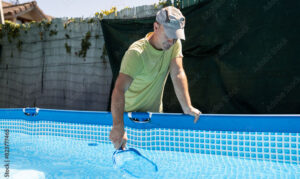
A robotic cleaner is self-contained. It plugs into a power supply on the deck, runs its own motor and filter, and doesn’t load your pool filter at all. This is the one people mean when they ask if they can cancel service.
What a good robot genuinely handles
Credit where it’s due. A robot does the floor and walls more thoroughly than most people with a pole ever will, because it doesn’t get bored and it doesn’t skip the deep end.
Maytronics’ own listing for the Dolphin Nautilus CC Plus with Wi-Fi puts it at $849, with a 2-hour default cycle, floor and wall cleaning, an ultra-fine filter, and a maximum pool length of 40 feet. If your pool is under 40 feet long, as plenty of backyard pools in Thousand Oaks and Camarillo are, that covers the whole thing. Run it a few times a week and the floor stays clean between visits in a way a once-a-week vacuum can’t match.
Robots also catch the fine stuff. Dust that blows in during Santa Ana winds settles on the floor as a gray film, and an ultra-fine robot filter picks up a lot of it before it ends up in your main filter.
A robot is the best employee you’ll ever have for the floor. It just can’t read a test strip or hear a pump bearing.
What no pool vacuum does
Here’s what a robot doesn’t touch, no matter what it costs. It doesn’t test chlorine, pH, alkalinity or stabilizer, and it doesn’t add chlorine or acid. It doesn’t empty the skimmer basket or the pump basket. It doesn’t clean or backwash the main pool filter.
Many don’t scrub the waterline either (the $849 Dolphin above lists waterline scrubbing as “No”). And none of them look at the equipment pad for drips, noises or pressure changes.
Every item on that list is something that, ignored for a few weeks, costs real money. The floor is the one part of pool care where falling behind is mostly cosmetic.
Chemistry is the part that goes wrong quietly
A pool with a clean floor and no chlorine looks fine right up until it doesn’t. The CDC recommends a pH between 7.0 and 7.8 and at least 1 ppm of free chlorine in pools, and both drift every week from sun, heat, rain and swimmers. Heat and sun eat chlorine, so a summer pool in Simi Valley or Moorpark usually needs more of it than one sitting under the marine layer in Ventura.
When that slips, you’re not looking at a dirty floor anymore. You’re looking at a green pool and an algae cleanup, which costs more than several months of the service you canceled. The robot will keep driving laps in green water, too.
Robots have chemistry limits too. Maytronics’ user manual for the Dolphin Classic 19+ lists a maximum of 4 ppm chlorine and a pH range of 7.0 to 7.8 for the robot, and says to take it out of the pool whenever you shock. So someone still has to know what the water’s doing, if only to protect the robot.
Robot owners have chores too
People buy a robot to get out of work and then discover it comes with a small amount of its own. Maytronics’ Classic 19+ manual “highly recommends” cleaning the filter basket after every cycle, says to break down and rinse the ultra-fine filter panels about once a month, and to untangle the cable once a week.
The same manual says to remove the robot before anyone gets in the water, to store it out of direct sun when it’s not running, and to keep the power supply at least 10 feet from the pool edge. None of that is hard. But “set it and forget it” isn’t quite how the manufacturer describes it.
Pressure-side cleaners need attention too. Polaris says to empty the debris bag when it’s halfway full, and sooner with heavy debris, because a full bag can tip the cleaner.
Leaves and wind: where cleaners fall behind
Fall in the Conejo Valley means oak and sycamore leaves, and a Santa Ana event can dump a week’s worth of debris in an afternoon. A robot’s filter basket is small. It fills up, the robot stops picking things up, and the rest sinks and stains.
The skimmer basket fills at the same time. Pentair’s skimmer manual says skimmer baskets should be checked and emptied at least once a week, and once a day when it’s especially windy. A full skimmer basket starves the pump, and the pump basket behind it fills next. No cleaner empties either one.
Robot, pressure cleaner or weekly service
| Job | Robotic cleaner | Pressure cleaner | A proper weekly service |
|---|---|---|---|
| Floor and walls | Yes, often better than manual | Mostly floor, some walls | Yes, once a week |
| Waterline tile | Depends on model | No | Yes |
| Water testing and chemicals | No | No | Yes |
| Skimmer and pump baskets | No | No | Yes |
| Main filter cleaning | No (reduces load) | No | Checked, cleaned on schedule |
| Equipment check | No | No | Yes |
| Your time | Rinse filter, untangle cable | Empty bag, maintain booster pump | None |
So, does a pool vacuum replace a pool service?
It replaces one task out of six. If you’re willing to do the other five yourself every week, test kit and all, a robot plus your own Saturday morning can absolutely work. Plenty of owners do it well.
If you’re not, the robot doesn’t change the math as much as it seems. It makes the pool look cleaner between visits, which is real, but the parts that keep the water safe and the equipment alive still need a person. Our breakdown of what weekly pool service costs and what it should include is a good checklist to compare against.
Where a robot and a service work together
Honestly, this is the best setup for a lot of pools. The robot keeps the floor clean during the week. The weekly visit handles chemistry, baskets, filter and equipment. Your main filter sees less debris, which helps it go longer between cleanings (and helps you avoid the symptoms in our post on a pool filter going bad).
If you have a robot, tell your service. It changes what they need to do on the floor, and they can keep an eye on the chlorine level so you’re not running the robot in water above its rated limit.
Asked at the pad, every week
Can I leave my robot in the pool all the time? Maytronics’ manual says to remove it whenever you shock the pool and before anyone swims, and to store it out of the sun. Leaving it parked on the floor for weeks isn’t what the manufacturer has in mind.
Will a robot clean up after a storm? Some of it. Big leaf loads overwhelm the robot’s basket fast. Scoop the leaves off the surface and empty the skimmer first, then let the robot do the fine stuff.
Is a robot worth it if I already have weekly service? If you like a spotless floor all week, yes. If the floor looks fine to you by the next visit, it’s a nice-to-have, not a need.
Thinking about dropping service for a robot?
Before you cancel anything, try a month of doing the full list yourself: test twice a week, empty both baskets, check the filter pressure, look at the pad. If that’s easy, great. If it isn’t, we’re happy to keep handling the parts the robot can’t, and our maintenance plans cover exactly that. Reach out here with your pool size and what cleaner you run.
Every visit ends with an email report with photos and water readings, so you’ll know what the robot missed. Call (805) 586-2055.
Robot handles the floor. Who handles the rest?
Our weekly visits end with an email report, photos and water readings, which covers the part a robot can’t tell you. Your robot can keep doing what it’s good at.
Keep the robot. It just isn’t a pool service.
Primary Pool Services – Ventura County
Thousand Oaks · Westlake Village · Agoura Hills · Camarillo · Newbury Park · Simi Valley · Moorpark · Ventura · Oxnard
Story produced with The Final Code.